There are two different quantum timelines, and organizations keep watching the wrong one.
The first is the technology timeline.
When does fault-tolerant quantum computing arrive?
When can Shor's algorithm threaten today's cryptography?
Reasonable people can disagree about those dates.
The second timeline is much less mysterious.
How long will it take your organization to discover, prioritize, replace, test and verify its cryptography?
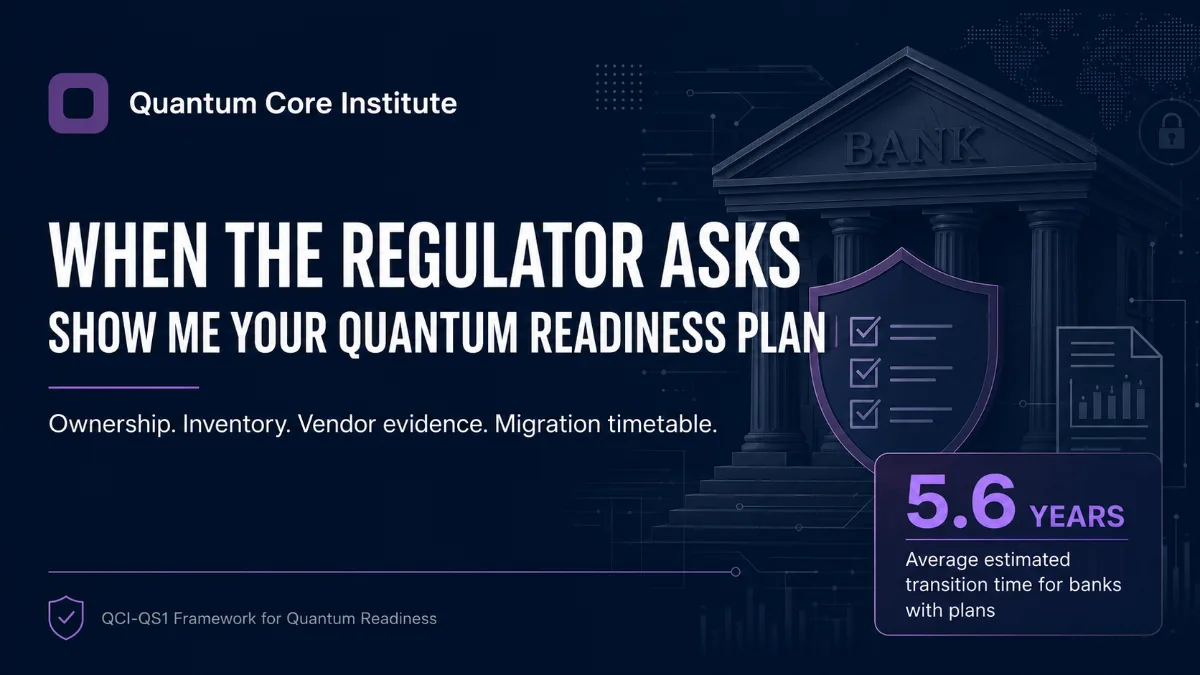
Hong Kong banks are giving us a useful data point:
5.6 years.
That changes the risk calculation.
An organization does not need certainty about the arrival of a cryptographically relevant quantum computer. It needs enough runway to finish before uncertainty becomes urgency. And the HKMA has gone one step further. It explicitly says PQC is not a one-off IT project.
That may be the most important sentence in this week's news.
Standards will change.
Algorithms will change.
Vendor implementations will change.
Threat assessments will change.
The organization therefore needs a standing cryptographic capability, not a migration project followed by a victory lap. We have been calling that quantum readiness. Regulators are beginning to describe the same thing.