"We can wait until quantum demonstrates clear business value before deciding how it fits into our technology strategy."
That may be backwards.
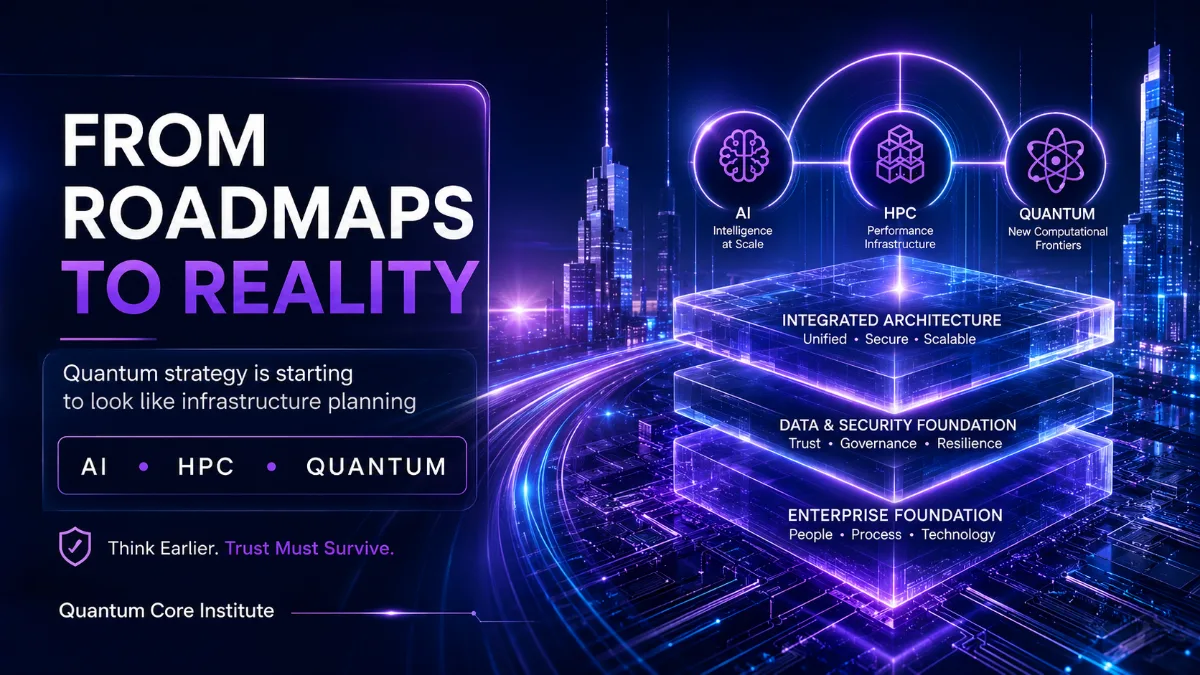
By the time a particular quantum workload becomes commercially attractive, organizations may already need data pipelines, hybrid architectures, security controls, vendor relationships, workforce capabilities, procurement models, and governance structures capable of supporting it.
Those things do not appear because a better processor arrives.
They have to be built.
The same lesson applies to quantum risk.
Organizations often separate the opportunity conversation from the security conversation.
One team explores quantum computing.
Another team worries about post-quantum cryptography.
A third team handles cloud infrastructure.
Someone else owns AI.
That separation becomes harder to defend as the technologies converge. The future enterprise environment is increasingly likely to involve classical computing, AI, high-performance computing, and quantum resources operating together. The governance model should probably anticipate that before the architecture forces it.