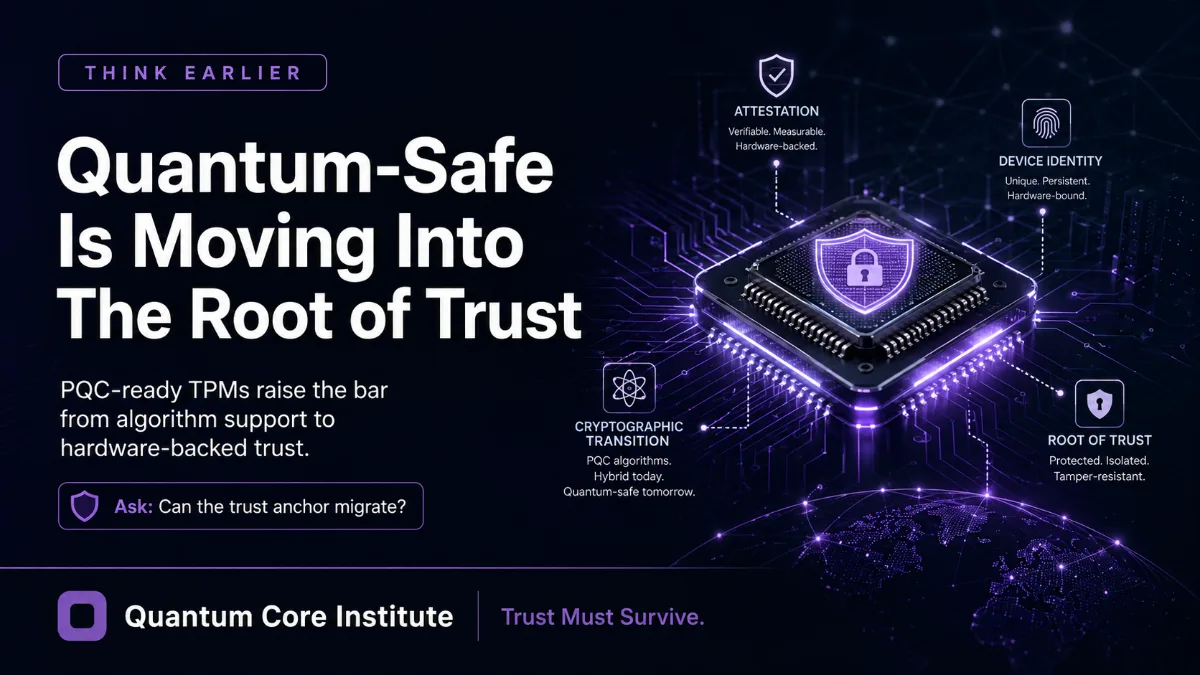
The post-quantum conversation has spent years focused on algorithms.
- Which algorithm replaces RSA?
- Which signature scheme replaces today's digital signatures?
- Which systems support the new standards?
Those questions still matter. But they are no longer enough.
If the hardware underneath an organization's systems cannot support the transition, application-level migration may solve only part of the problem.
TCG now distinguishes between a "PQC-ready TPM" and a "PQC-upgradable TPM." Its baseline uses the PC Client Platform TPM Profile 1.07 and the newer TPM 2.0 specifications that incorporate post-quantum capabilities. That means procurement decisions made today can determine whether devices remain trustworthy years from now.
And there is a second signal in the same direction.
IonQ disclosed that it is operating a hybrid quantum-safe architecture across sites in Switzerland and South Korea, combining post-quantum cryptography with quantum key distribution. Whatever one thinks of QKD as an enterprise solution, the important point is that organizations are beginning to treat quantum-safe migration as something to deploy, test, and operate rather than merely discuss.
The transition is moving down the technology stack.
From algorithms.
To software.
To networks.
And now to the hardware roots that establish trust in the first place.