Organizations may be approaching the stage where the cryptographic problem becomes easier to understand than the migration problem. That is familiar territory. The same thing happened with cloud adoption. The technology worked before governance caught up.
It happened with SaaS. Employees adopted applications faster than organizations could inventory them.
It happened with generative AI. The tools appeared on desktops before policies, controls, and ownership models were established.
Post-quantum cryptography could follow exactly the same pattern. Except cryptographic migration has one particularly unpleasant characteristic.
You cannot fix what you cannot find.
Before an organization can migrate securely, it needs to know where cryptography exists, what depends on it, who owns it, how long the data must remain protected, which vendors control parts of the stack, and what happens when keys or certificates have to change.
Then comes the harder question:
Can all of that happen without disrupting the users, customers, applications, devices, identities, and business processes that depend on it?
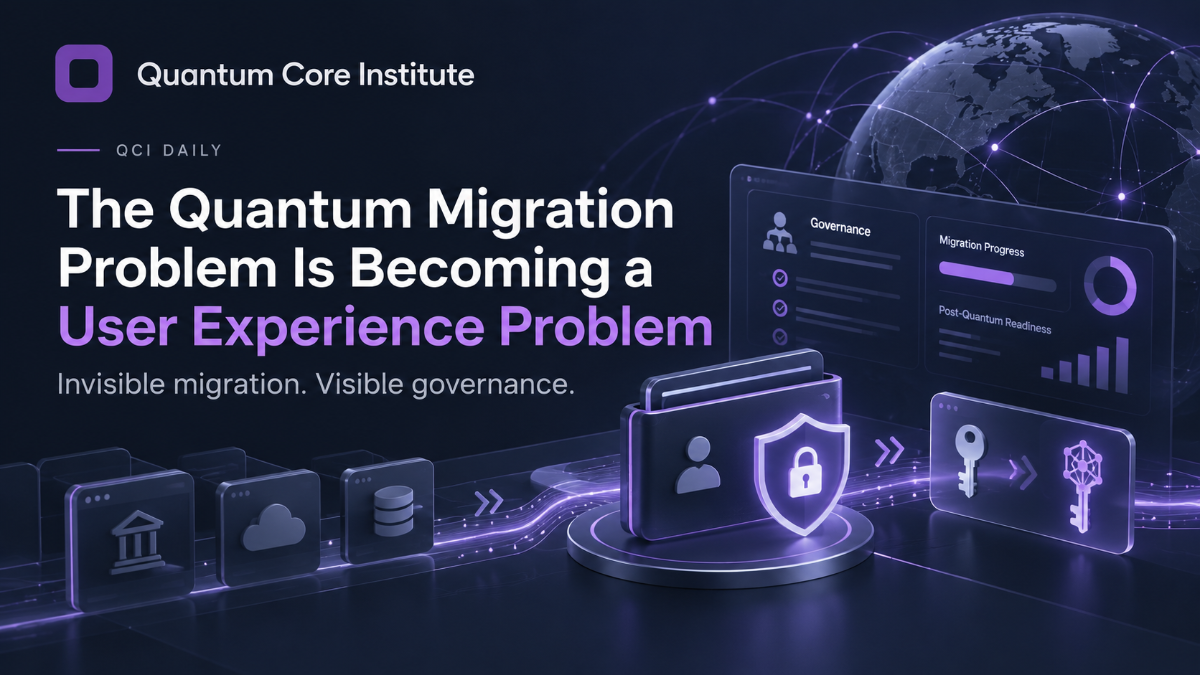
That is why “invisible migration” is such an important idea. But invisible to the user cannot mean invisible to management. The board should be able to see what is migrating. Security should know what remains vulnerable. Procurement should know which vendors have credible transition plans. Engineering should know which systems can rotate cryptography without redesign. And management should be able to demonstrate measurable progress.
The future of quantum readiness may not be defined by who adopts the most sophisticated algorithm first.
It may be defined by who can change cryptography without breaking everything around it.
Think Earlier. Trust Must Survive.