For years, quantum risk lived comfortably in the future.
The machines were not powerful enough. The standards were still developing. Migration seemed distant enough that organizations could afford to watch.
That comfort is becoming harder to justify.
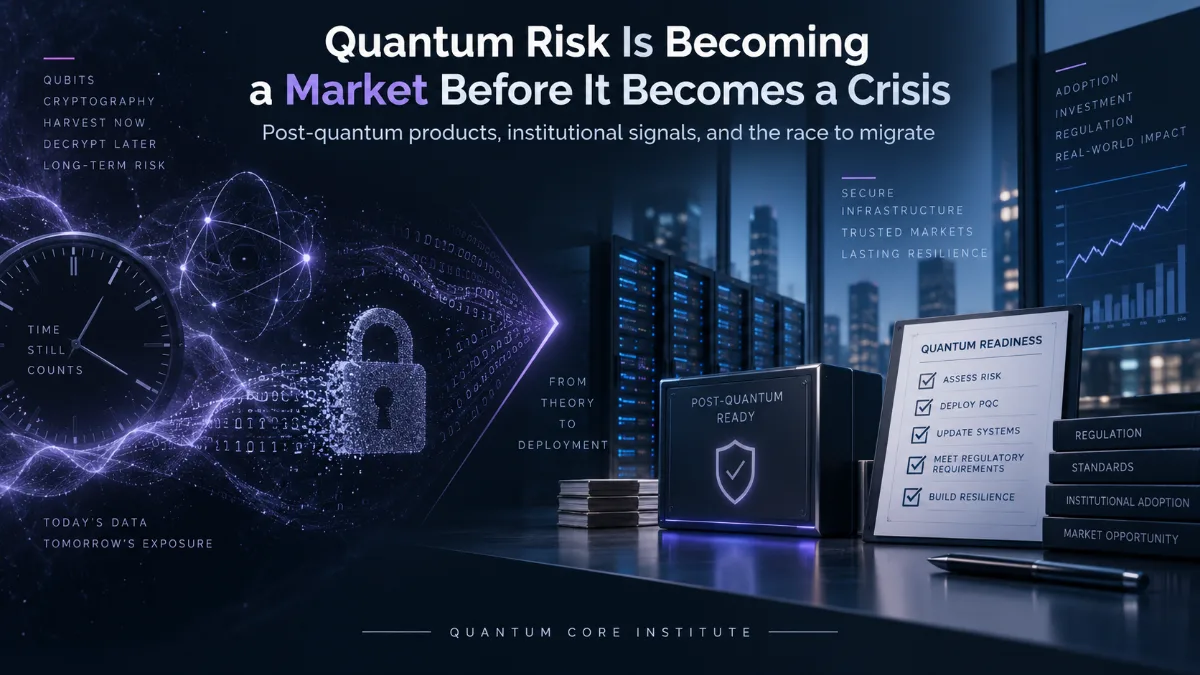
Across several very different parts of the technology ecosystem, the same pattern is emerging. Crypto projects are advertising post-quantum protection as a competitive feature. Enterprise platforms are beginning to incorporate post-quantum cryptography into mainstream infrastructure. Government and financial-sector initiatives are building migration structures. Security discussions are increasingly focused on harvest-now, decrypt-later rather than waiting for some dramatic future “Q-Day.”
None of this means a cryptographically relevant quantum computer has suddenly arrived. It means something more operationally important.
The market is beginning to behave as though migration time matters.
That distinction matters enormously.
An organization does not need to know the exact date when RSA or elliptic-curve cryptography becomes vulnerable in order to know that replacing cryptography across applications, vendors, certificates, identities, APIs, software, devices and long-lived data can take years.
That makes quantum readiness less a prediction problem and more a management problem.