We may be entering the stage where quantum readiness begins to resemble what happened with cloud security, privacy, and AI governance.
At first, it was a technical issue.
Then it became a compliance issue.
Then customers started asking about it.
Then investors started asking about it.
And eventually it became part of the sales conversation.
Quantum readiness may be following the same path. That raises an important challenge. A company, blockchain, custodian, or infrastructure provider may soon be able to say: “We are quantum resistant.”
But what does that actually mean?
Does it mean one signature algorithm has been replaced?
Does it mean the entire trust chain is resistant?
Does it include identity, certificates, code signing, APIs, wallets, bridges, vendors, and recovery mechanisms?
Can algorithms be changed again if today’s post-quantum choices are challenged later?
Is there evidence? That is where the conversation needs to become more disciplined.
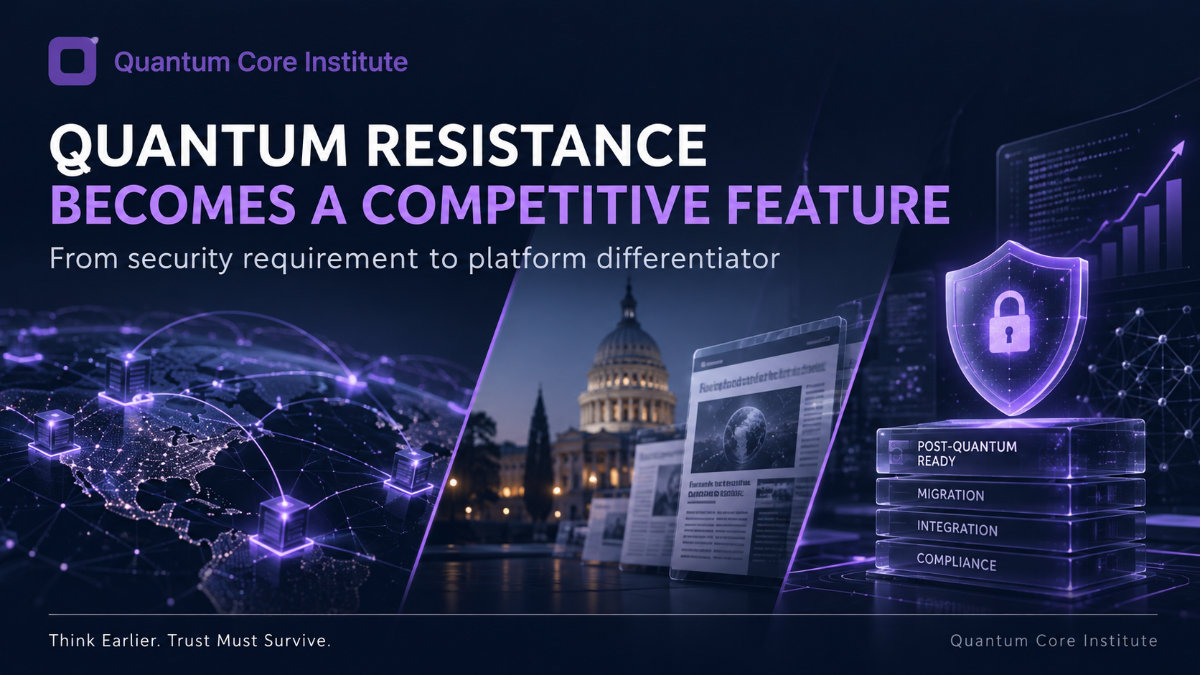
Quantum resistance is a feature. Quantum readiness is a capability.
The first can be added to a product. The second requires governance, inventory, testing, migration planning, crypto-agility, third-party oversight, and evidence.
As quantum resistance becomes a competitive claim, boards and buyers should start asking a very simple question: “Show me what ‘quantum ready’ actually means in your environment.” Because the next phase of this market will not suffer from a shortage of quantum claims.
It will suffer from a shortage of comparable evidence.
Think Earlier. Trust Must Survive.