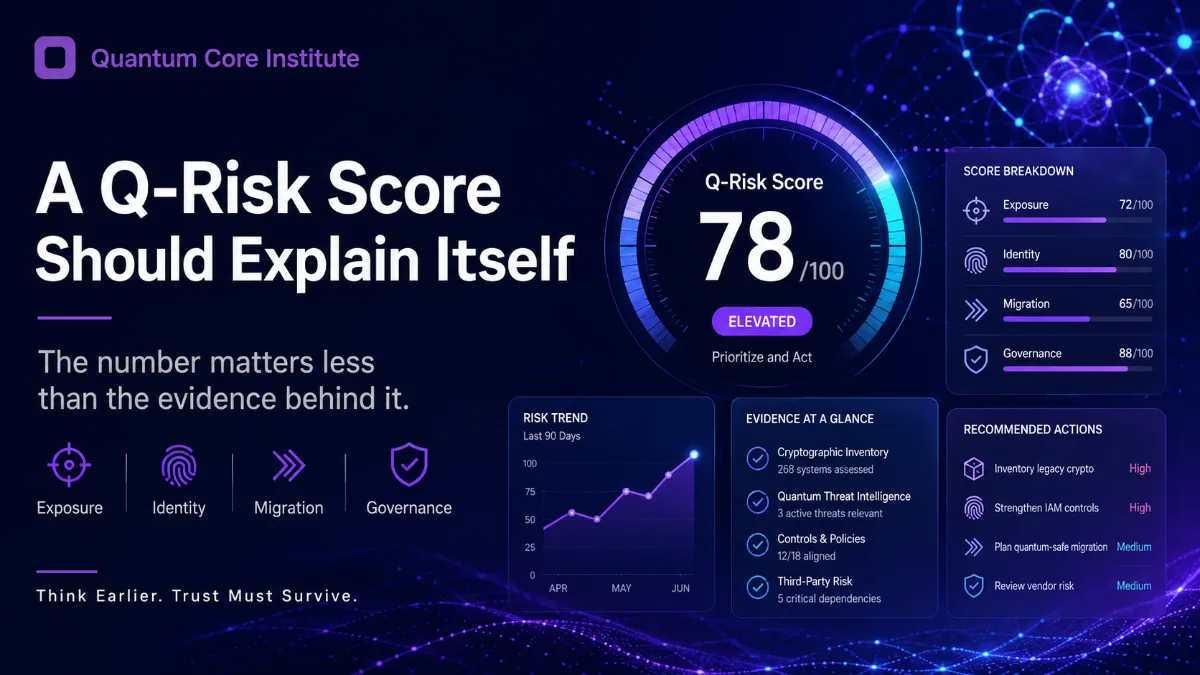
If your organization created a quantum-risk score today, the first question should not be what number you want to see. It should be what evidence actually determines that number.
A defensible score should reflect several dimensions at once. It should show where vulnerable cryptography exists and how critical those systems are. It should account for whether identity, signatures, certificates, authentication, and hardware roots of trust can migrate. It should consider how long sensitive data must remain protected, how quickly systems can realistically change, and how much of the transition depends on vendors, cloud providers, suppliers, and other third parties.
The important part is not producing a number.
It is making the number explainable.
A board should be able to ask, “Why are we a 62 instead of a 78?” and receive an answer grounded in evidence.
That answer should point to specific exposures, dependencies, migration constraints, and governance gaps.
That is when a Q-Risk Score becomes useful.
It stops being a dashboard number and becomes a tool for prioritization, accountability, and measurable improvement.